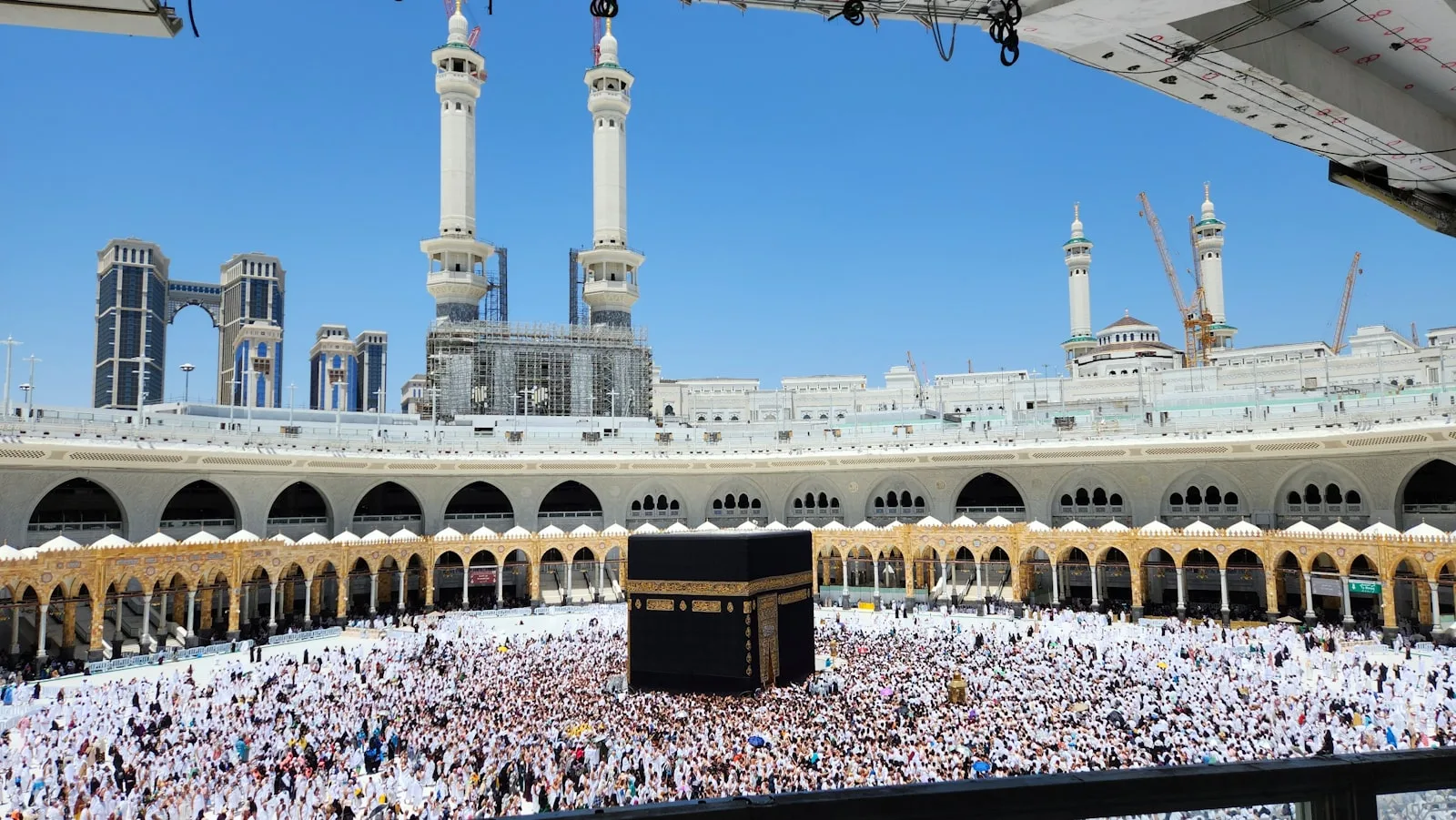
Hajj & Umrah Vaccinations
Clear, up-to-date guidance on the vaccine Saudi Arabia requires from every pilgrim, the jabs recommended for crowded conditions, and how to stay well in the heat and crowds of Hajj and Umrah.
In short
To enter Saudi Arabia for Hajj or Umrah you must show a valid certificate for a quadrivalent Meningitis ACWY (MenACWY) vaccine given at least 10 days before arrival; the conjugate vaccine is accepted for 5 years and the older polysaccharide vaccine for 3 years. Pilgrims arriving via a polio-affected country also need a polio dose, and seasonal flu, up-to-date COVID-19 and routine vaccines such as MMR are strongly recommended for the crowded conditions. Crewe Travel Clinic provides Hajj and Umrah vaccination appointments and certificates for pilgrims across Crewe, Nantwich, Stoke-on-Trent and the wider Cheshire area.
Mandatory vaccine
A quadrivalent Meningitis ACWY (MenACWY) vaccine is a compulsory entry requirement for all pilgrims aged 1 year and over
MenACWY timing
Must be given at least 10 days before arrival; conjugate certificate valid 5 years, polysaccharide valid 3 years
Polio
An extra polio dose (OPV or IPV, 4-12 weeks before entry) is required from pilgrims arriving via polio-affected countries; UK pilgrims travelling direct are exempt
Recommended
Seasonal flu and up-to-date COVID-19 are advised, plus a check of routine UK vaccines such as MMR, tetanus, diphtheria and polio
Plan ahead
Book 4-8 weeks before you travel so any vaccine courses can be completed and certificates issued in time
Crowd risks
Heat, respiratory infections including MERS-CoV, foodborne illness and crush injuries are the main non-vaccine health risks
The mandatory Meningitis ACWY (MenACWY) vaccine
Meningococcal disease has caused large, deadly outbreaks during past Hajj seasons, with infection carried home and passed to family members and the wider community. Because of this, Saudi Arabia requires every pilgrim aged one year and over to show a valid certificate of vaccination with a quadrivalent Meningitis ACWY vaccine before a visa is granted and on arrival. This protects against four groups of the bacteria, A, C, W and Y, the strains linked to pilgrimage outbreaks. The dose must be given at least 10 days before you arrive in Saudi Arabia for the certificate to be accepted. How long the certificate stays valid depends on the type of vaccine: the modern conjugate MenACWY vaccine, which is what UK clinics now use, is accepted for 5 years, while the older polysaccharide vaccine is only accepted for 3 years. The certificate must show your full name, the vaccine type and authentication from an official healthcare provider. It is important to know that the everyday UK MenC or MenB vaccines do not meet this requirement, and that even the ACWY vaccine does not cover every cause of meningitis, so any pilgrim who becomes unwell with a fever, severe headache, stiff neck or rash during or after the trip should seek urgent medical attention.
- Compulsory for all pilgrims aged 1 year and over for both Hajj and Umrah
- Must be a quadrivalent ACWY vaccine, not MenC or MenB alone
- Give at least 10 days before arrival; conjugate valid 5 years, polysaccharide valid 3 years
- Certificate must show your name, vaccine type and an official provider's authentication
- MenACWY does not cover all causes of meningitis, so watch for symptoms after travel
Polio requirements for pilgrims
Saudi Arabia has polio entry rules to protect this mass gathering from reintroducing the virus. The additional polio requirement applies to pilgrims who are arriving in Saudi Arabia via a country that is reporting wild poliovirus or circulating vaccine-derived poliovirus, or that is otherwise considered at risk of spread. Those travellers are asked to have had one dose of oral polio vaccine (OPV) or inactivated polio vaccine (IPV) between 4 and 12 weeks before entry, and to be able to prove it. Pilgrims travelling directly from the UK, which is polio-free, are exempt from this extra certificate. Even so, polio protection is part of routine UK immunisation, and it is sensible to confirm your tetanus, diphtheria and polio cover is up to date before you travel, as a single combined booster (such as Revaxis) covers all three. If your journey routes through, or you have recently lived in, a polio-affected country, tell the clinician at your appointment so the requirement can be checked against the current list.
- Required for pilgrims arriving via polio-affected or at-risk countries
- If required, one OPV or IPV dose is needed 4-12 weeks before entry
- UK pilgrims travelling directly are exempt from the extra polio certificate
- Routine UK polio cover comes in a combined tetanus, diphtheria and polio booster
- Tell your clinician about recent travel to or residence in affected countries
Seasonal flu, COVID-19 and yellow fever
Beyond the mandatory meningitis jab, several vaccines are strongly recommended because of the unique conditions of Hajj and Umrah, where millions of people from around the world gather in close, prolonged contact. Saudi Arabia recommends that pilgrims have the seasonal flu vaccine before they travel, as flu spreads very easily in crowds; this is worth noting because pilgrims may be exposed to flu strains outside the usual UK winter season, and most healthy adults will need a private appointment for it. Keeping COVID-19 vaccination up to date in line with current Saudi guidance is also advised, and because only a limited group is eligible through the NHS, many pilgrims will arrange any COVID-19 dose privately. Yellow fever vaccination is not required for pilgrims travelling directly from the UK, but a valid yellow fever certificate is required for anyone arriving from a country where yellow fever is a risk; that certificate becomes valid 10 days after vaccination and then lasts for life. If your itinerary includes a yellow fever risk country before Saudi Arabia, raise it at your appointment so the correct certificate can be arranged.
- Seasonal flu vaccine is recommended; pilgrims may meet flu outside the UK winter season
- Keep COVID-19 vaccination up to date in line with current Saudi guidance
- Most healthy adults arrange flu and COVID-19 vaccines privately rather than via the NHS
- Yellow fever is required only if arriving from a yellow fever risk country
- A yellow fever certificate becomes valid 10 days after vaccination and lasts for life
Routine and recommended vaccines to review
Alongside the flu and COVID-19 jabs, a pre-travel appointment is the ideal moment to confirm your routine UK vaccines are current, because diseases that are well controlled at home can spread quickly when pilgrims from many countries mix. Outbreaks of measles continue worldwide, so it is important to check you have had two doses of MMR, and to confirm your combined tetanus, diphtheria and polio booster is in date. Depending on your accommodation, the length of your stay, your diet and your own health, a clinician may also discuss hepatitis A, which relates to food and water hygiene, and hepatitis A and B combined, as hepatitis B can be a consideration because of the head-shaving (halq) ritual if a barber's blade is not single-use. Typhoid is sometimes raised for longer or wider trips in the region. None of these are entry requirements, but each can be a sensible addition, and the right combination is tailored to you at your appointment.
- Confirm two doses of MMR, as measles can spread quickly in mass gatherings
- Check your combined tetanus, diphtheria and polio booster is in date
- Hepatitis A relates to food and water hygiene during your stay
- Hepatitis B may be discussed because of the head-shaving ritual and shared blades
- Typhoid may be considered for longer trips or wider travel in the region
Coping with heat, crowds and crush injuries
Hajj currently falls in the hot summer months, with the 1447H (2026) pilgrimage expected in late May, when daytime temperatures in Mecca and Medina can climb well above 40C and many rituals are performed outdoors. Heat exhaustion and heatstroke are real and potentially fatal risks, so pilgrims should drink fluids regularly, eat and rest in the shade where possible, wear loose, light clothing, use an umbrella, apply a high-factor sunscreen of at least SPF 30 and reapply it every few hours, and recognise the warning signs of overheating early. The sheer number of people also brings a risk of crush injuries and falls, particularly during the busiest rites such as the stoning of the pillars and the circling of the Kaaba. Staying calm, avoiding the most congested times, keeping to the flow of the crowd and not stopping suddenly in a moving throng all help. Minor foot injuries are common, so comfortable, protective footwear that suits the ritual requirements and good foot care will reduce blisters and cuts. Anyone with a heart, lung or other long-term condition should have a pre-travel review, as the combination of heat and exertion can place extra strain on the body.
- Drink fluids often, rest in shade and use SPF 30+ sunscreen reapplied every few hours
- Wear loose, light clothing and use an umbrella against direct sun
- Learn the signs of heat exhaustion and heatstroke and act early
- Avoid the busiest times for crowded rites and move with the flow of the crowd
- Wear comfortable, protective footwear and look after your feet
Respiratory infections, MERS-CoV and food hygiene
Respiratory infections, from common coughs and colds to flu and COVID-19, spread very easily in the close quarters of Hajj and Umrah, and the dry, dusty air can make symptoms worse. Frequent hand washing, using hand sanitiser, wearing a face covering in the most crowded settings and not sharing drinks, food or utensils all reduce the risk. Saudi Arabia is also where Middle East Respiratory Syndrome (MERS-CoV) has occurred, a coronavirus linked to camels, so pilgrims should avoid contact with camels, not drink unpasteurised camel milk or eat undercooked camel meat, and seek medical advice if they develop a fever with breathing problems. Stomach upsets are common too: drink only bottled or boiled water, wash your hands before eating, choose freshly cooked hot food, avoid raw milk and unpeeled produce, and pack oral rehydration salts in case of diarrhoea. Should you return home with a fever, cough or diarrhoea, see a doctor and mention that you have been on pilgrimage so the right tests can be considered.
- Wash hands often, use sanitiser and avoid sharing drinks, food and utensils
- Consider a face covering in the most crowded indoor and outdoor settings
- Avoid camels, unpasteurised camel milk and undercooked camel meat to reduce MERS-CoV risk
- Drink only bottled or boiled water and choose freshly cooked hot food
- Carry oral rehydration salts, and tell any doctor about your pilgrimage if you fall ill after returning
Planning, certificates and Hajj & Umrah care at Crewe Travel Clinic
Timing matters for pilgrims because the mandatory MenACWY vaccine must be given at least 10 days before you arrive in Saudi Arabia, and some recommended vaccines need to be given in good time to take effect or to be completed as a course. As a rule, arrange a travel health appointment around four to eight weeks before you fly. Crewe Travel Clinic, the trading name of Crewe Pharmacy & Travel Vaccination Centre, is a GPhC-registered pharmacy that supports pilgrims preparing for Hajj and Umrah from Crewe, Nantwich, Sandbach, Alsager, Stoke-on-Trent and across the wider Cheshire and Staffordshire area. In a single appointment our clinical team can give the mandatory Meningitis ACWY vaccine and issue the certificate you need for your visa, review your polio status and routine vaccines, offer seasonal flu and other recommended jabs, and talk through staying well in the heat and crowds. Bring your travel dates, any record of past vaccinations and a list of any medicines you take so we can tailor the advice to your trip. Even if your departure is close, it is still worth seeking advice, as the meningitis vaccine can usually be given quickly provided the 10-day rule is met.
- Book around 4-8 weeks before departure where possible
- Mandatory MenACWY vaccine and certificate for your Saudi Arabia visa in one visit
- Review of polio, routine and recommended vaccines, plus heat and crowd advice
- Convenient for pilgrims across Crewe, Nantwich and Stoke-on-Trent
- Keep your meningitis certificate safe to present for your visa and on entry